


Last Updated: November 21, 2026
Quick Summary
To feed supplements to picky dogs, mix powders into a small portion of wet food, warm it slightly, or hide tablets in soft food, pill pockets or between two plain treats. Never mix a dose into a whole meal your dog may leave unfinished, and give each approach a fair run before switching.
- Powders tend to work better than capsules, tablets or hard chews for picky dogs because they blend into food.
- The three-treat trick offers a plain treat, then the medicated treat, then another plain treat straight away.
- Check the label before crushing or opening anything, as some supplements must be swallowed whole.
- If your dog refuses all forms after a week, change the supplement format rather than just the food.
- Keep a simple written log for the first month recording date, dose, technique used and whether the bowl was finished.
Table of Contents
- Why Picky Dogs Refuse Supplements and What Actually Works
- What You'll Need Before You Start
- How to Hide Dog Supplements in Food: 7 Techniques That Work
- Can You Mix Dog Supplements with Food? Safety Checks First
- How to Get a Dog to Take Pills, Capsules and Tablets
- When Your Dog Refuses Supplements: What to Do Next
- Common Mistakes When Feeding Picky Eaters
- Building a Daily Routine That Sticks
- Frequently Asked Questions
Why Picky Dogs Refuse Supplements and What Actually Works
Research reported by GlobalPETS on the Loop survey found that 48% of pets given food toppers were picky eaters, a higher share than in the general pet population.
The reason is rarely stubbornness. Dogs decide what to eat by smell and texture first, and many supplements fail on both. A hard tablet smells medicinal.
Here is the good news: how to feed supplements to picky dogs comes down to a handful of reliable techniques, matched to the form of supplement you are using.
What You'll Need Before You Start
Before you try anything, get four things ready. They make every technique below easier.
- The right daily dose, worked out by your dog's weight. Never guess.
- A favourite wet food or strong-smelling topper your dog already loves.
- A quiet feeding spot, away from other pets.
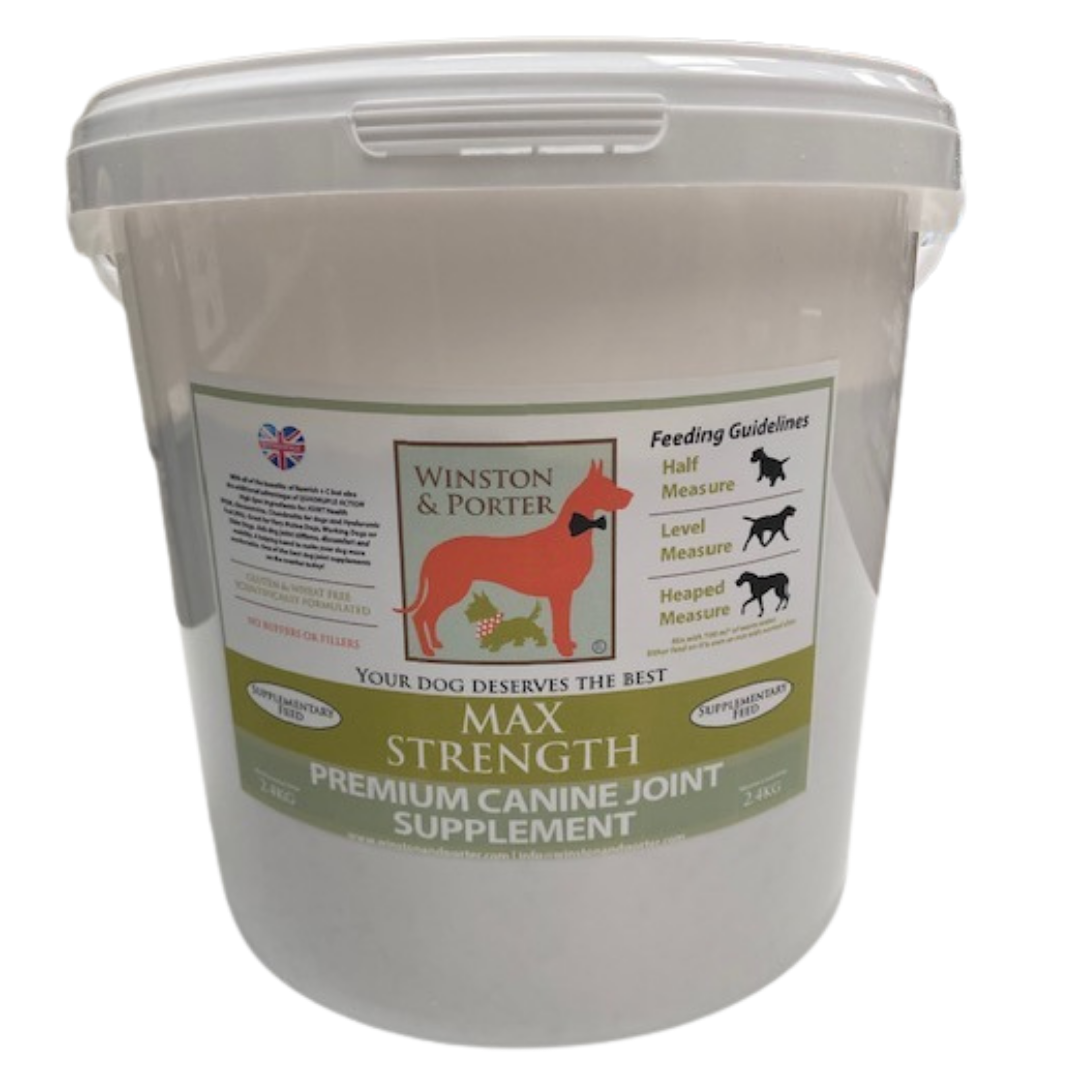
At Winston & Porter, we list the exact milligrams of every ingredient per serving on each product. Our Max Strength porridge, for example, combines glucosamine, chondroitin, MSM and hyaluronic acid with our full multivitamin and mineral blend. That transparency matters: without it, you cannot tell whether a supplement is worth the effort of getting it into your dog.
Matching the Supplement Form to Your Dog
Powders suit most fussy dogs best. K9 Power's guidance on supplement formats notes that powders tend to work better than capsules, tablets or hard chews for picky dogs, because they blend into food.
Chews have less room for joint ingredients, since flavourings and binders take up space. If you want to see which formats fussy dogs accept most readily, our guide to the best tasting dog joint supplements for picky dogs compares them side by side.
How to Hide Dog Supplements in Food: 7 Techniques That Work
Mixing a supplement into food is the simplest route for most dogs. These seven techniques work, roughly in order of how well fussy dogs accept them.
- Stir powder into a small portion of wet food. Use a quarter of the meal, mix fully, then add the rest.
- Warm the food slightly. A little warm water releases aroma, which is what draws a dog in.
- Use a strong-smelling topper. A spoon of gravy or fish-based wet food masks unfamiliar scents.
- Wrap a tablet in soft food. A small ball of pate or cheese works for most pills.
- Try a pill pocket. Ready-made soft pockets hide tablets and capsules well.
- Add a plain treat before and after. The medicated bite disappears between two normal ones.
- Sprinkle powder over the whole bowl. Only works if your dog eats every bite.
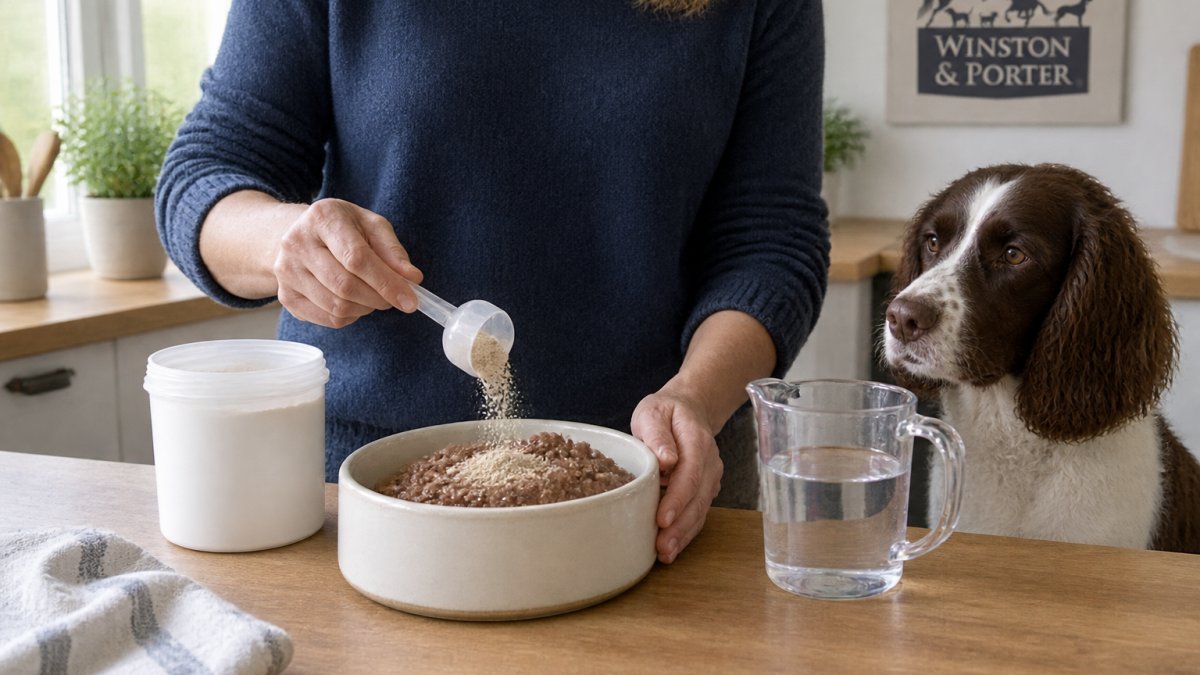
Watch out: never mix a supplement into a whole day's food if your dog may leave some. You cannot tell how much they got.
The Three-Treat Trick and Other Positive Reinforcement Methods
The three-treat trick works like this: offer a plain treat, then the medicated treat, then another plain treat straight away. The dog learns that the middle bite predicts more good things.
Use identical treats so your dog cannot tell which one is loaded. Keep your voice calm and never chase a refusal.
These are the seven food-based techniques the article recommends, roughly in the order fussy dogs accept them.
| Technique | What to do | Key detail |
|---|---|---|
| Stir powder into wet food | Mix into a quarter of the meal, then add the rest | Simplest route for most dogs |
| Warm the food slightly | Add a little warm water | Releases aroma that draws the dog in |
| Use a strong-smelling topper | Spoon of gravy or fish-based wet food | Masks unfamiliar scents |
| Wrap a tablet in soft food | Small ball of pate or cheese | Works for most pills |
| Try a pill pocket | Ready-made soft pockets | Hides tablets and capsules well |
| Add a plain treat before and after | Medicated bite between two normal ones | The three-treat trick |
| Sprinkle powder over the whole bowl | Only works if your dog eats every bite | Never mix into a whole day's food |
Can You Mix Dog Supplements with Food? Safety Checks First
Yes, many supplements can be mixed with food, but check three things first.
- Is the food safe for dogs? Onions, garlic, grapes, raisins, chocolate and xylitol are all harmful. Plain cheese, cooked chicken and dog-safe yogurt are fine in small amounts.
- Does the supplement come with mixing instructions? Follow them exactly.
- Is your dog on a prescription diet or medication? Ask your vet before adding anything.
VCA Animal Hospitals' advice on picky eaters makes a related point: a homemade diet must follow a recipe with specific amounts of each ingredient, including supplements, rather than having them added casually. The same logic applies to any bowl. Measure the dose, then mix.
How to Get a Dog to Take Pills, Capsules and Tablets
Pills are the hardest form for most fussy dogs, because a tablet announces itself by smell and texture before your dog has even tasted it. The technique matters, but so does knowing what you can safely do to the pill itself. Get that wrong and you can reduce how well the supplement works, or make the dose unreliable.
Check the label before you crush, split or open anything
Not every tablet or capsule can be altered. Before you reach for a pestle or pull a capsule apart, check the product label and any leaflet for instructions.
A common pattern is that hard tablets with a strong medicinal smell are the least accepted, while soft chews and powders blended into wet food are the most accepted. If your dog refuses tablets repeatedly, switching format is often more effective than perfecting your wrapping technique.
The wrap-and-offer routine, step by step
- Give one unloaded treat first so your dog relaxes and expects something good.
- Wrap the tablet completely. No edges showing, no powder on the outside. A small ball of pate, a piece of cooked chicken or a soft training treat all work.
- Offer it calmly on a flat palm. Don't hover or stare, pressure makes refusal more likely.
- Follow immediately with a second plain treat, so the loaded bite predicts more good things.
- If it is refused, do not repeat more than twice. Remove it without drama and try again at the next meal with a different vehicle.
Watch out: never hide a tablet in a whole meal if your dog may walk away partway through. You cannot tell how much they received, and underdosing is the most common hidden problem with picky dogs.
When a tablet simply will not work
If your dog reliably detects and spits tablets, stop escalating the concealment. A porridge-style supplement can replace capsules and tablets entirely. Our Max Strength dog joint supplement porridge mixes with warm water into a soft porridge that can be stirred into wet food. Because the full serving goes into a small portion of food you can see finished, you also know the dose was taken.
When Your Dog Refuses Supplements: What to Do Next
Stop, and do not force it. A missed dose is a small problem. A dog that stops eating is a big one. What most owners need at this point is a clear order of steps rather than another list of tricks, so work through the following progression one stage at a time.
A step-by-step troubleshooting order
- Refuses the loaded bowl? Feed a plain meal so your dog does not go hungry, then try a different vehicle at the next meal. Do not re-offer the same loaded bowl.
- Eats around the powder or leaves the bottom of the bowl? Mix the dose into a smaller portion of wet food, a quarter of the meal, and give that first, then the rest plain. This way the full dose sits in the part your dog eats first.
- Accepts it once, then refuses the next day? Rotate between two or three vehicles your dog already loves, rather than switching every day. Novelty helps once; predictability helps long term.
- Refuses all forms after a week? Change the supplement format, not just the food. A dog that rejects powder may accept a porridge-style supplement, and vice versa.
- Still refusing, or showing pain, limping, swallowing difficulty or appetite loss? Speak to your vet.
Missed doses and underdosing
When a dog leaves food behind, owners often assume the dose was taken. It usually was not, or only partly. Follow the product label or your vet's advice on missed doses rather than doubling up, doubling a missed dose is not a safe default, and with some ingredients it is actively unwise. If your dog regularly leaves part of a loaded meal, treat that as a dosing problem to solve, not a feeding quirk to live with.
When refusal is a veterinary matter
Persistent refusal is sometimes behavioural and sometimes medical. Book a vet appointment if your dog:
- refuses supplements and has also gone off food generally;
- struggles to swallow, drops food, or coughs while eating;
- shows pain, limping or a change in appetite;
A vet can also confirm whether a supplement is appropriate at all, and whether an alternative format or route is available.
Give each approach a fair run
Joint supplements take time. Joint supplements take time, so give each approach a fair run before switching. Keep a simple note of what you tried and when, it makes the conversation with your vet far more useful, and it stops you repeating the same failed technique.
Common Mistakes When Feeding Picky Eaters
The biggest mistake is hiding a dose in a meal your dog may not finish. Second is switching formats every day, which teaches your dog nothing.
Others we see often:
- Using too little food to mask the smell. A whole bowl of wet food hides a powder better than a spoonful.
- Forgetting to check the milligrams. A long ingredient list means little if each item is dosed too low to matter.
- Giving up after two days. Consistency beats cleverness.
Building a Daily Routine That Sticks
Feed the supplement at the same time every day, in the same place, as part of a meal. Dogs thrive on routine, and a predictable pattern lowers suspicion.
Keep a simple written log for the first month: date, dose, technique used, and whether the bowl was finished. Our free printable mobility tracker for dogs gives you a four-week template to record changes and share clear notes with your vet.
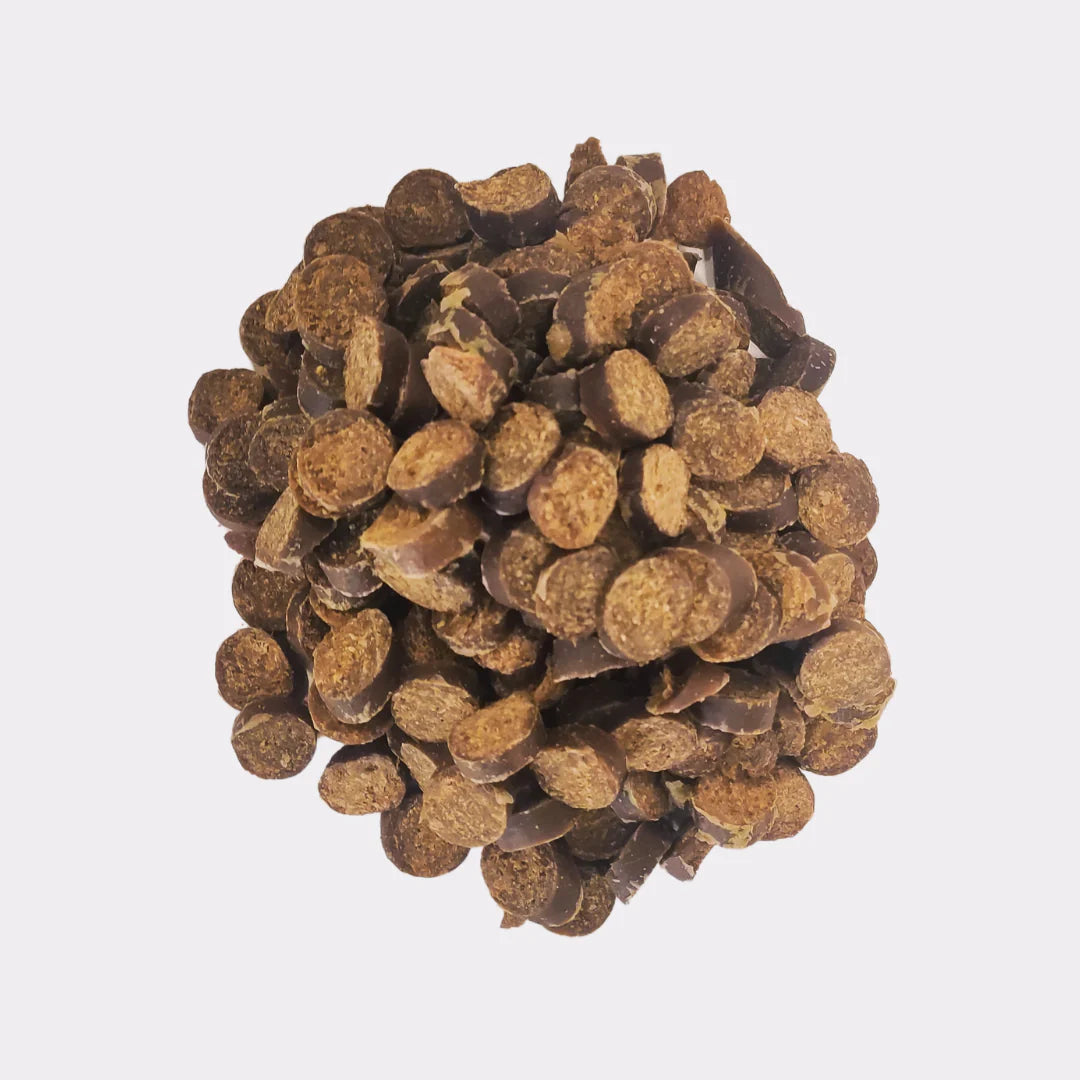
If you want to understand how the key ingredients in our supplements are thought to work, read the science behind our dog and horse supplements. And if a treat helps the routine along, our venison sausage training treats make a useful plain treat before and after a loaded bite.
Feeding a fussy dog is a daily puzzle, and it can feel like a losing one. The answer is usually patience plus the right format.
Frequently Asked Questions
How do I get my picky dog to take supplements?
Start by matching the form to your dog's habits. Powders mixed into a small portion of wet food suit dogs that bolt their meals, while pill pockets or a wrapped tablet work better for dogs that swallow treats whole. The three-treat trick, offering a plain treat, then a supplemented one, then another plain treat, builds a positive pattern. Keep sessions calm and give the same routine at the same time daily. If your dog still refuses after a week of consistent effort, stop forcing it and speak to your vet about alternatives.
Can I mix dog supplements with food?
Yes, most powdered supplements are designed to be stirred into food. Mix into a small portion of wet food first rather than the whole bowl, so you know your dog has taken the full dose. Avoid mixing into a full meal if your dog is a grazer, because the supplement may sit uneaten. Warm water can help distribute powder evenly and release aroma. Check the product label for specific feeding guidance, and never add supplements to a homemade diet without a properly specified recipe.
What foods can I use to hide a supplement for my dog?
Soft, strong-smelling foods work best: a small piece of cheese, a spoon of plain yogurt, a dab of peanut butter (check it contains no xylitol), or a sliver of cooked chicken. Wet food and gravy are useful for powders. Keep portions small so your dog swallows rather than chews and inspects. Avoid toxic foods such as chocolate, grapes, raisins, onions and garlic. If your dog has a sensitive stomach or food allergies, introduce any new food slowly and in tiny amounts.
What should I do if my dog refuses a supplement?
Stop offering it for a day, then try a different delivery method, such as a powder stirred into warm wet food instead of a tablet. Check the dose and feeding table to confirm you are giving the right amount for your dog's weight. Some supplements take about three weeks of daily use before owners notice a difference, so consistency matters more than forcing a single dose. If refusal continues, or your dog shows signs of illness, contact your vet before trying another product.

Leave a comment