
Price :
QTY :
CART TOTALS :
There are items
in your cart
CART TOTALS :
With this product also buy:
Your shopping bag is empty
Go to the shopIf you're researching the best horse joint supplement in the UK, you're likely focused on one key outcome:
👉 Maintaining soundness, performance, and longevity.
Equine joints are subjected to significant mechanical stress — whether in competition, training, or even regular riding. Over time, this can lead to cartilage degradation, inflammation, and reduced joint function.
Unlike muscle, cartilage has limited regenerative capacity. Once deterioration begins, management becomes essential.
This is where a high-quality horse joint supplement can play a critical role.
To understand what works, it's important to understand what’s happening inside the joint.
A healthy joint consists of:
Articular cartilage (shock absorption)
Synovial fluid (lubrication)
Joint capsule (stability)
With repeated loading and age:
Cartilage begins to break down
Synovial fluid quality reduces
Inflammatory processes increase
This can lead to conditions such as degenerative joint disease (DJD) and osteoarthritis.
The goal of supplementation is not to “cure” these conditions, but to:
👉 Support joint function, reduce inflammation, and slow degeneration
There is growing evidence that targeted supplementation can support joint health in horses — particularly when used consistently.
Well-formulated horse joint supplements can:
Support cartilage metabolism
Improve synovial fluid viscosity
Reduce inflammatory responses
Support overall joint resilience
In practice, many owners report:
Improved range of movement
Reduced stiffness at the start of work
Better recovery post-exercise
However, results depend heavily on:
👉 ingredient quality, dosage, and consistency
Not all supplements are formulated equally. The efficacy of a horse joint supplement UK depends on the inclusion of ingredients with demonstrated roles in joint health.
A key structural component of cartilage.
Supports:
Cartilage repair processes
Maintenance of joint structure
A bioavailable sulphur source.
Supports:
Connective tissue integrity
Reduction of inflammatory stress
Naturally present in synovial fluid.
Supports:
Joint lubrication
Shock absorption
Smooth articulation
A structural protein in cartilage and connective tissue.
Supports:
Joint integrity
Tissue resilience
Helps modulate inflammatory pathways associated with joint stress.
There is increasing scientific and clinical interest in the role of nutritional supplementation in supporting equine joint health.
Research has focused particularly on ingredients such as glucosamine, MSM, and hyaluronic acid, which are commonly used in horse joint supplements in the UK.
Glucosamine is a naturally occurring compound involved in the formation and repair of cartilage.
Studies suggest it may:
Support cartilage metabolism
Help maintain joint structure
Contribute to long-term joint health
Hyaluronic acid plays a key role in maintaining the viscosity of synovial fluid.
Research indicates it may:
Improve joint lubrication
Support shock absorption
Enhance joint movement
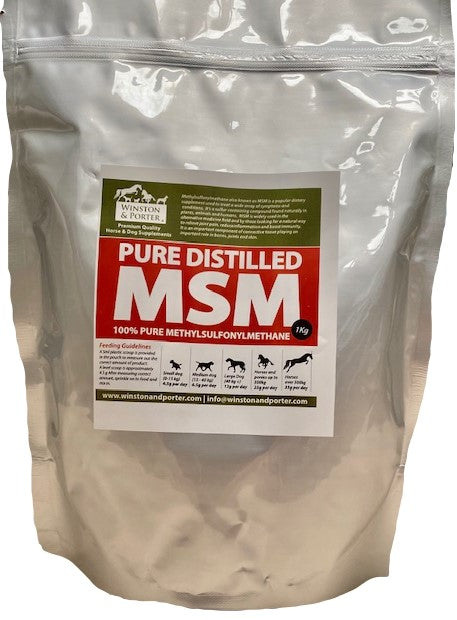
MSM provides a source of sulphur, which is important for connective tissue.
It has been associated with:
Supporting normal inflammatory responses
Helping maintain joint comfort
Supporting recovery after exercise
While individual results vary, many studies and field observations suggest that multi-ingredient joint supplements can support:
Joint mobility
Comfort during work
Long-term joint maintenance
👉 The key factor is not just the ingredient — but the dose, quality, and consistency of use.
It is important to recognise that supplements are not a replacement for veterinary care or correct management.
However, when used as part of a structured approach, high-quality joint supplements can play a valuable role in supporting equine joint health.
Maintaining joint health is a key part of equine management, particularly for horses in regular work, competition, or advancing age.
Veterinary professionals generally approach joint health through a combination of:
Appropriate training and workload management
Correct nutrition and body condition
Regular monitoring of movement and performance
Targeted support where needed
Nutrition is recognised as an important factor in supporting overall joint function.
From a veterinary perspective, joint supplements are typically used to:
Support cartilage maintenance
Help maintain joint lubrication
Support normal inflammatory processes
While supplements do not replace veterinary treatment, they are often used as part of a long-term management strategy.
One of the most important principles in equine joint care is early intervention.
Veterinary guidance often focuses on:
Identifying subtle changes in movement
Supporting joints before significant degeneration occurs
Managing workload to reduce excessive strain
👉 Preventative support is generally more effective than reactive treatment.
Joint supplementation is commonly considered for:
Performance horses in regular work
Horses in high-impact disciplines
Older horses showing signs of stiffness
Horses returning to work after injury
In these cases, consistent support can help maintain comfort and mobility.
Joint health is a long-term consideration.
Veterinary approaches typically emphasise:
Consistent management
Regular monitoring
Adjustments based on workload and age
Similarly, nutritional support is most effective when used consistently over time, rather than as a short-term solution.
Effective joint care is rarely based on a single solution.
Instead, it involves a combination of:
Training and conditioning
Nutrition and supplementation
Veterinary input when required
High-quality joint supplements can play a supportive role within this broader approach.
Joint supplements should always be used responsibly.
Follow feeding guidelines
Introduce gradually where appropriate
Seek veterinary advice for lameness or ongoing issues
👉 Supplements are designed to support normal joint function, not to diagnose or treat medical conditions.
When evaluating horse joint supplements in the UK, the key differentiators are not marketing claims — but formulation.
Sub-therapeutic dosing is common in low-cost products.
👉 Without sufficient levels, results are limited.
Joint health requires multiple pathways to be supported:
Structure
Lubrication
Inflammation
Single-ingredient products are rarely sufficient.
Ingredients must be absorbable and usable by the horse.
Joint support is cumulative.
👉 Daily supplementation is essential.
Performance horses place significantly greater strain on their joints.
Disciplines such as:
Showjumping
Eventing
Dressage
involve repetitive loading, flexion, and impact.
A joint supplement for horses in work can help:
Maintain joint integrity under load
Support flexibility and movement
Improve recovery between sessions
Age-related joint changes are common in horses over 10–12 years.
Typical signs include:
Stiffness when starting work
Reduced range of movement
Slower recovery
A joint supplement for older horses can help support comfort and mobility, improving quality of life.
Joint supplements do not provide immediate results.
Typical progression:
Weeks 1–2: Initial physiological support
Weeks 3–4: Reduced stiffness
Weeks 5–8: Noticeable improvements in movement
Long-term use provides the greatest benefit.
Even experienced owners can make these mistakes:
Introducing support too late
Choosing low-strength supplements
Inconsistent feeding
Expecting rapid results
Effective joint care requires a long-term, consistent approach.
At Winston & Porter, our approach is simple:
👉 Focus on formulation, not marketing.
Our joint supplements are developed to support:
Joint structure
Lubrication
Mobility
Long-term performance
High-strength active ingredients
Premium, carefully selected components
Designed for daily use
Trusted by horse owners across the UK
High-quality horse joint supplements UK are well tolerated when used correctly.
They are designed to support natural joint function rather than interfere with it.
As always, consult your vet if your horse has underlying conditions.
A supplement containing glucosamine, MSM, and hyaluronic acid at effective levels, with a focus on quality and dosage.
Yes, particularly when used consistently and formulated correctly.
Typically 2–6 weeks, with continued improvement over time.
Joint support can be beneficial in horses in regular work or high-intensity training.
Yes — from leisure riding to high-performance competition.
Joint health is fundamental to your horse’s longevity and performance.
With the right approach — including appropriate management, training, and targeted joint supplementation — you can help support soundness throughout your horse’s working life.
The equine supplement market varies widely in terms of ingredient quality, strength, and formulation.
Many products focus on low-cost formulations that may not deliver meaningful results.
Lower levels of active ingredients
Basic or single-ingredient formulations
Limited focus on absorption
Inconsistent results reported by owners
Our approach is based on formulation integrity and consistency.
High-strength active ingredients
Multi-ingredient support (structure, lubrication, comfort)
Designed for daily use and long-term support
Focus on real-world performance and mobility
Joint health is complex.
Supporting it effectively requires addressing multiple factors:
Cartilage integrity
Synovial fluid quality
Inflammatory response
👉 This is why multi-ingredient, well-balanced formulations tend to deliver better outcomes than single-ingredient products.
When selecting a horse joint supplement in the UK, it’s worth considering:
Ingredient levels (not just presence)
Overall formulation
Consistency of use
Real-world feedback
Choosing the right supplement can play an important role in maintaining mobility, comfort, and long-term performance.