


Last Updated: November 14, 2026
Quick Summary
Horses that sweat heavily after hard work usually need horse electrolytes to replace the sodium, chloride and potassium lost in sweat. Light exercise that barely raises a sweat is less likely to call for extra minerals. Always offer fresh water alongside any electrolytes.
- Sweat carries away sodium, chloride and potassium as well as water.
- Hard schooling, competition, long hacks in heat and travel usually call for electrolytes.
- Compare the amount per serving, not just the ingredient names, on the label.
- Powders suit daily use, while paste can help horses that are reluctant to drink.
- Speak to your vet if your horse has a health condition or shows signs of dehydration.
Table of Contents
- Why Horses Lose Electrolytes When They Sweat
- When Horses Need Electrolytes After Exercise
- Horse Electrolyte Supplement Ingredients: What to Look For
- Powder or Paste: Choosing a Format Your Horse Will Take
- Daily Electrolytes for Horses: Is It Necessary?
- Horse Hydration and Electrolyte Balance: Water Comes First
- Putting an Electrolyte Routine in Place for Your Horse
- Frequently Asked Questions
Why Horses Lose Electrolytes When They Sweat
When a horse works hard, it sweats, and sweat carries away more than water. It also takes sodium, chloride and potassium with it.
Sweat is mostly water, but it is salty. A horse in strenuous work can lose a meaningful amount of water and electrolytes in a single session, particularly in warm or humid weather. A 2022 review by Michael Lindinger, Oral Electrolyte and Water Supplementation in Horses, sets out how much water and electrolyte horses lose through sweating and why both need replacing.
When Horses Need Electrolytes After Exercise
Horses generally need electrolytes after work that makes them sweat heavily, such as hard schooling, competition, long hacks in heat or travel. Light exercise that barely raises a sweat is less likely to call for extra minerals.
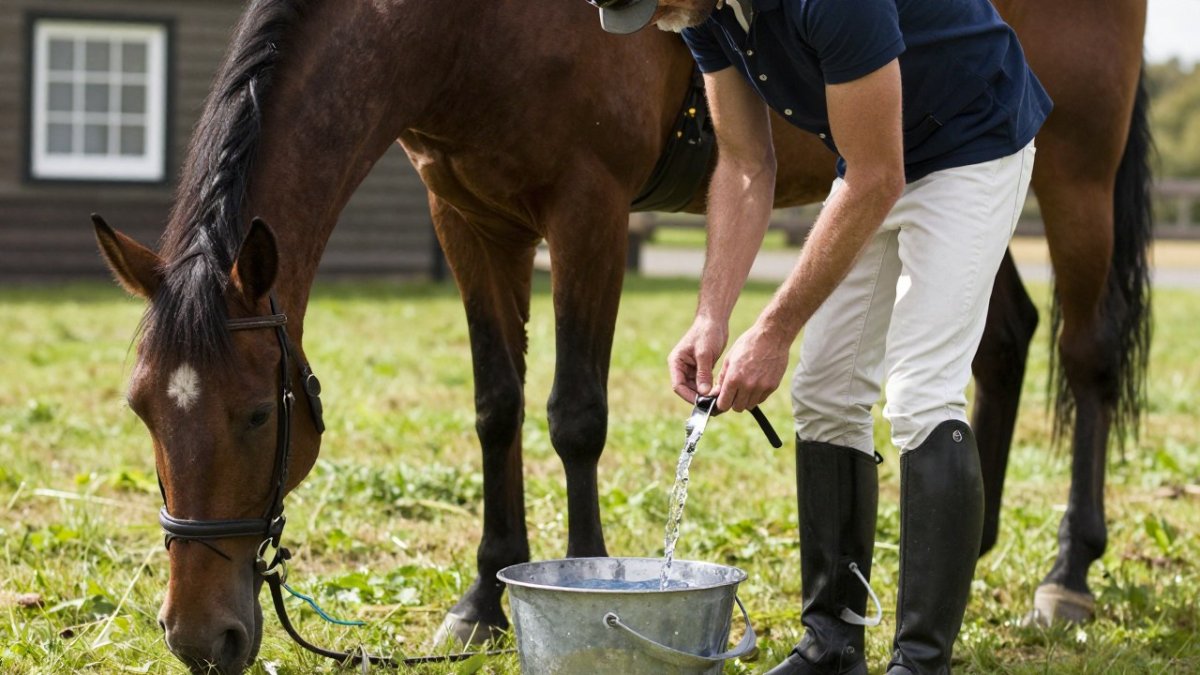
The timing is not one fixed rule. Read the product directions and speak to your vet if you are unsure.
At Winston & Porter, our Electrolytes for Horses are designed for horses in hard or strenuous work, horses that sweat heavily, and horses travelling or under stress. Two heaped measures (approx 30 g) can be given before strenuous exercise, with a further 30 g after if needed.
For lighter workloads, our guide on supporting a horse after light exercise covers simpler aftercare options.
Horse Electrolyte Supplement Ingredients: What to Look For
A good electrolyte product should be clear about what it contains and how much of each ingredient it provides. Ingredient names alone are not enough. Look for the amounts per serving and the purpose of each component, because two products that both list "sodium chloride" can deliver very different amounts per dose.
Not all electrolyte products are built the same way. Some focus on the core salts lost in sweat, while others add glucose, Epsom salts, calcium carbonate or trace minerals. Comparing the composition on the label will tell you which profile suits your horse's work. Our Electrolytes for Horses list their composition openly, including anhydrous glucose, sodium chloride, Epsom salts and calcium carbonate, along with trace elements per kilogram, so you can see exactly what each 30 g measure provides.
Sodium, chloride and potassium
Chloride is the main electrolyte lost in horse sweat, followed by sodium and then potassium, according to the Lindinger review, which is why salt (sodium chloride) sits at the heart of most electrolyte products. Potassium is also commonly included in equine formulas, as it is part of the sweat profile. Replacing sweat losses is only one part of post-exercise care, though, and rest, hydration and a gradual return to work matter too. Holistic Equine Wellness has a useful guide to recovery after competition.
Reading the label and dosage
Check the serving size, the number of servings per pack, and whether the feeding directions are clear. A label should tell you how much to give for a given situation, not just how the product is marketed. Look for a stated amount per serving rather than a long ingredient list with no quantities, and check whether the directions distinguish between routine work and heavy sweat loss.
Work out the cost per day for your horse's dose rather than comparing pack prices alone. Our Electrolytes for Horses are £13.95 and are sold in 1kg and 2kg sizes. At 30 g a day, the 1kg pack lasts about 33 days and the 2kg pack about 66 days, which makes the cost per serving easy to compare against other products.
A practical comparison is to line up products by sodium, chloride, potassium, sugar, serving size, form and cost per serving. That is the comparison most buyers actually need, and it is the one we have built our own formulation around: a clear electrolyte profile with glucose to support uptake, Epsom salts and calcium carbonate for mineral balance, and trace elements declared per kilogram.
Watch out: a product that lists several ingredients without amounts per serving makes it impossible to judge whether your horse is getting a meaningful dose, so treat vague labels with caution and ask the manufacturer for the figures.
Evidence-based dosing and safety limits
Dosing should follow the label and the horse's workload. Routine exercise in cool weather usually needs less than hard work in heat, and a horse that is not sweating heavily is unlikely to need a full dose. Give electrolytes with access to fresh water, because the minerals help a horse use the fluid it takes in but cannot replace it. If your horse has an existing health condition, is on medication, or is showing signs of dehydration such as lethargy, dry gums or reduced urine output, speak to your vet before changing its electrolyte routine.
That is why our directions distinguish between a dose before strenuous exercise and a further dose after if needed, rather than recommending the same amount for every horse.
Compare the amounts per serving, not just the ingredient names, when choosing an electrolyte product for your horse.
| Component | What it is | Why it matters |
|---|---|---|
| Sodium chloride | Core salt lost in sweat | Main mineral to replace after work |
| Potassium | Part of the sweat profile | Commonly included in equine formulas |
| Anhydrous glucose | Added to support uptake | Helps the horse use the electrolytes |
| Epsom salts and calcium carbonate | Added for mineral balance | Support overall mineral balance |
| Serving size | Check amount per serving | Two products can deliver very different doses |
| Price per serving | Compare daily cost | Pack price alone is misleading |
Powder or Paste: Choosing a Format Your Horse Will Take
Horse electrolytes are sold as powders and pastes, and each suits different situations. Powders can be dissolved in water or sprinkled onto feed, which makes them easy to use daily. Paste is often used after long travel or demanding exercise, when a horse may be reluctant to drink.
Some horses are fussy about taste or texture. If your horse leaves powder in the feed bowl, a paste or a syringe may be easier to manage.
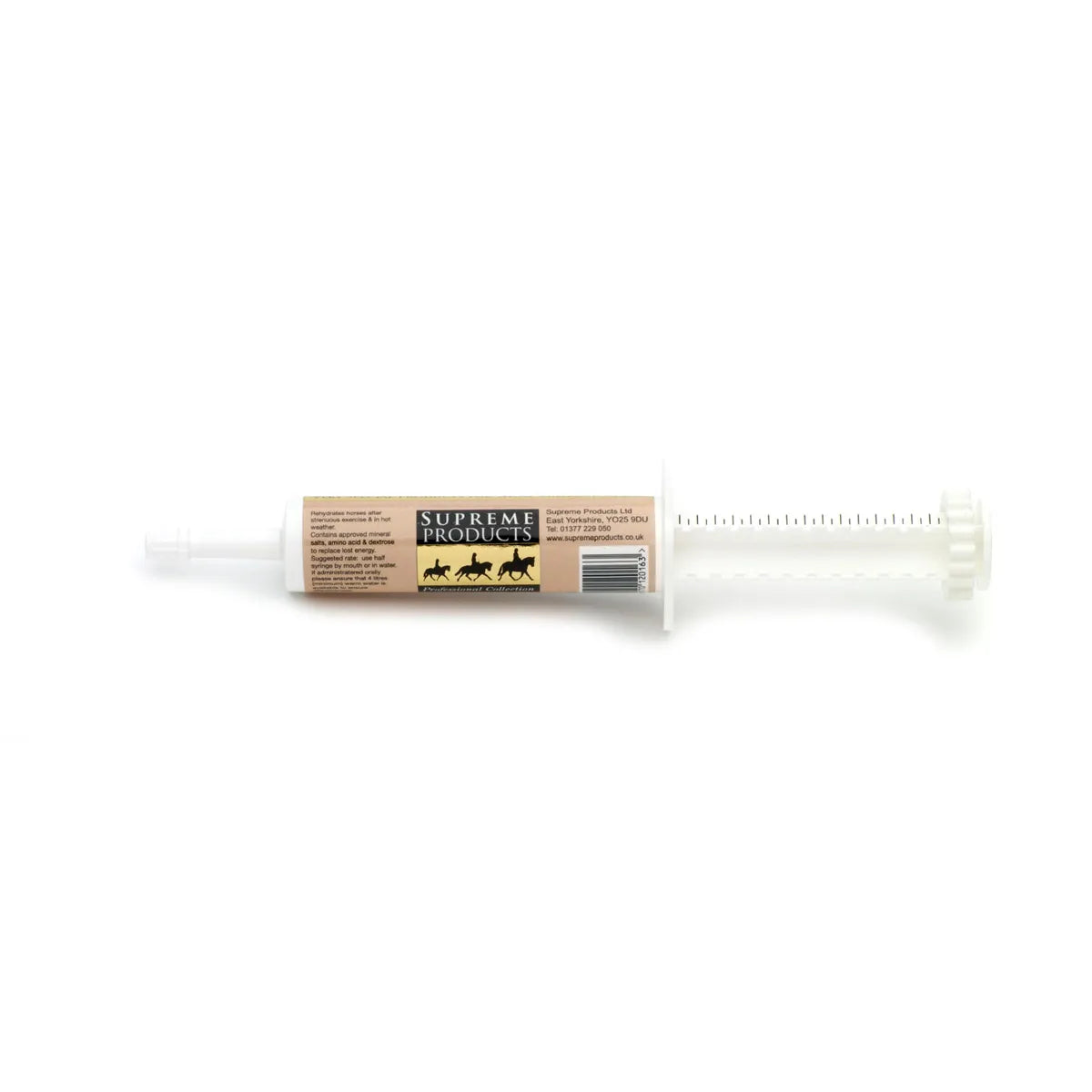
For dosing paste or liquid, a syringe made for electrolytes helps you give an accurate amount. The Electrolyte Syringe from Supreme Products is £7.00.
Daily Electrolytes for Horses: Is It Necessary?
Not every horse needs electrolytes every day. A horse in light work on a cool day is unlikely to lose large amounts of minerals. A horse in daily hard work, or one that sweats heavily in summer, may benefit from more regular support. The useful question is not "should I feed electrolytes every day?" but "how much sweat is my horse losing, and what is it losing?"
A practical post-exercise decision guide
Work through four factors after each session to decide whether electrolytes are needed and which type to choose.
Workload. Light hacking or schooling that barely raises a sweat usually needs no extra electrolytes beyond access to water and a salt lick. Hard schooling, fast work, jumping, eventing, racing or long hacks in heat are the sessions where sweat loss is meaningful and an electrolyte dose after exercise makes sense.
Sweat loss. Look at the horse's neck, shoulders and flanks. A horse that is dripping and lathering has lost more than one that is lightly damp. The more visible the sweat, the stronger the case for replacing sodium and chloride afterwards.
Weather. Warm, humid conditions reduce a horse's ability to lose heat and increase sweat loss for the same work. On hot days, even moderate work can justify an electrolyte dose, and water intake should be monitored closely.
Recovery needs. A horse that is travelling, competing away from home, or under stress may drink less than usual, which is where a paste or a carefully mixed bucket can help. A horse that is relaxed at home and drinking well may only need plain water and a salt lick after light work.
Daily salt and sodium-chloride supplementation
A common pattern is to provide a salt lick or a small daily amount of sodium chloride as a baseline, then add a broader electrolyte after hard or sweaty work. Sodium chloride is the simplest way to cover the main sweat losses, while a formulated electrolyte adds potassium, magnesium and glucose to support uptake and recovery. Our Electrolytes for Horses are designed for the harder end of that spectrum: horses in hard or strenuous work, horses that sweat heavily, and horses travelling or under stress. Two heaped measures (approx 30 g) can be given before strenuous exercise, with a further 30 g after if needed.
Daily use is a judgement call, and the product directions and your vet's advice should guide it. Our long-term supplement comparison explains how to weigh up different options for ongoing care, and our guide on supporting a horse after light exercise covers simpler aftercare for lighter workloads.
Always offer fresh water alongside any bucket that has electrolytes added.
Competition rules and ingredient transparency
If you compete, check the rules for your discipline before using any supplement, because some competitions restrict certain ingredients or require declarations. Keep the label and batch details so you can show what your horse is receiving if asked.
Horse Hydration and Electrolyte Balance: Water Comes First
Electrolytes are not a replacement for water. Always make sure fresh drinking water is available. If you add electrolytes to a bucket, offer plain water alongside it so your horse can choose to drink.
Putting an Electrolyte Routine in Place for Your Horse
Start by noting when your horse sweats most, how hot the weather is, and how much work it does. That will show you whether a before-exercise dose, an after-exercise dose, or both makes sense.
Introduce any new product gradually and watch how your horse responds. Keep fresh water available at all times, and check with your vet before making changes, especially if your horse has an existing health condition.
Our Electrolytes for Horses are made in Northallerton, North Yorkshire, and are designed for horses and ponies in hard or strenuous work.
Frequently Asked Questions
Do horses need electrolytes after exercise?
Not every horse does. Horses that sweat heavily, work hard in hot weather, travel or are under stress lose more sodium, chloride and potassium than usual, and replacing them can help. Light work on a cool day usually does not call for supplementation. Fresh water should always be available, and if you are unsure whether your horse needs extra salts, ask your vet for advice on your horse's workload and sweat loss.
When should I give my horse electrolytes?
Many electrolyte products are designed to be given before strenuous work and, if needed, again after exercise. Winston & Porter's Electrolytes for Horses are recommended at two heaped measures (approx 30 g) before strenuous exercise, with a further 30 g after exercise if needed. Always follow the feeding instructions on the label and offer plain water alongside the supplement.
Should a horse drink water after taking electrolytes?
Yes. Electrolytes support the balance of salts lost in sweat, but they do not replace water. Whether you dissolve the powder in water or sprinkle it onto feed, make sure a bucket of plain fresh water is available so your horse can drink whenever it wants. Water access matters most after exercise and in hot weather.
Can I give my horse electrolytes every day?
Daily use depends on the horse's workload, sweat loss and diet, so it is best to check the label and speak to your vet before adding electrolytes to a routine. Horses in light work may not need them every day, while those in hard, regular work may benefit more consistently. Keep to the product's recommended serving size rather than increasing the dose.

Leave a comment