
Are Expensive Joint Supplements Worth It? A Cost Guide
Table of Contents
- Why Joint Supplements Cost So Much (And What You're Actually Paying For)
- The Evidence: Do More Expensive Joint Supplements Work Better?
- Dog Joint Supplement Ingredients: What Decides the Price
- Price Per Effective Daily Dose: The Only Cost Comparison That Matters
- How Long Do Dog Joint Supplements Take to Work?
- What Dog Joint Supplement Reviews Reveal About Value
- When to Stop, Switch or Reassess a Joint Supplement
- Frequently Asked Questions
Last Updated: October 20, 2026
Why Joint Supplements Cost So Much (And What You're Actually Paying For)
Are expensive joint supplements worth it? Mostly no, and the reason comes down to what the premium actually buys. A higher price on a joint supplement usually reflects ingredient purity, dose strength, and testing, not a better clinical outcome. The global bone and joint health supplement market is projected to grow from USD 16.29 billion in 2026 to USD 34.04 billion by 2035, according to Towards Healthcare's market forecast, so plenty of brands are competing for your money.
Here is what sits behind the label:
- Ingredient cost per gram. Human-grade glucosamine and chondroitin cost more than feed-grade versions.
- Dose strength. A product that lists an ingredient at 2,500mg per serving costs more to make than one listing 250mg.
- Testing and transparency. Batch testing and full dose disclosure add cost.
- Packaging and marketing. A premium tub and a big ad budget are baked into the price.
At Winston & Porter, we publish the exact milligram amounts per serving on every product page. That is the first thing to check before you pay a premium.
The Evidence: Do More Expensive Joint Supplements Work Better?
No. Price does not predict effectiveness. What predicts it is whether the formula contains an ingredient with a plausible mechanism, at a dose that has actually been studied, in a form the body can absorb. Premium pricing frequently leans on ingredients where the evidence is weakest.
Here is how the evidence stacks up by ingredient, and what a realistic benefit looks like:
| Ingredient | Evidence certainty | Realistic expected benefit |
|---|---|---|
| Glucosamine | Mixed, several large trials show little difference from placebo | Modest at best; unlikely to be noticeable in isolation |
| Chondroitin | Mixed, often studied alongside glucosamine | Modest at best; hard to separate from co-ingredients |
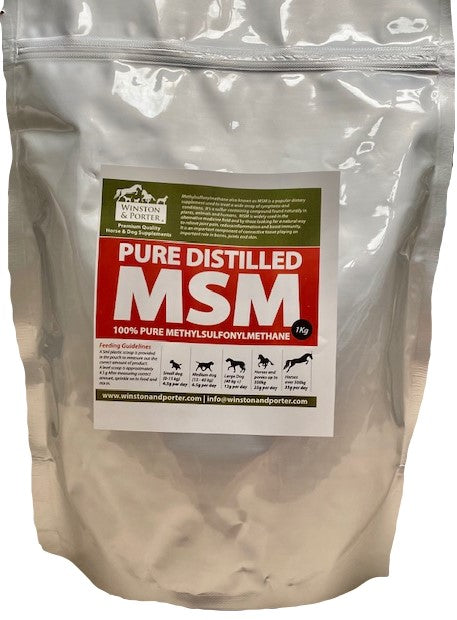
| MSM | Limited but promising, small trials | Some owners report improved comfort and willingness to move |
| Hyaluronic acid | Limited oral evidence | Plausible lubrication role; effect size unclear |
| Serrapeptase | Emerging, mechanism plausible | Reported reduction in stiffness and tenderness |
Harvard Health Publishing's review of glucosamine and chondroitin found the evidence for these two ingredients is not compelling, though some studies show modest benefit. A Mississippi State University Extension review of equine joint supplementation went further, noting that oral glucosamine dosing produced serum and synovial-fluid concentrations too low to modify joint-cell activity.
That matters because premium pricing so often rests on those two ingredients. A £60 tub and a £20 tub built on the same weak evidence are not meaningfully different. What separates products is dose, ingredient quality, and whether the formula includes anything with a plausible mechanism.
What a realistic improvement looks like
Be sceptical of any claim of a dramatic transformation. A realistic outcome from a well-formulated joint supplement is a dog that rises more easily after rest, is more willing on the morning walk, and shows less hesitation on stairs. Owners typically notice these small shifts before anything else. If you are expecting a dog that suddenly bounds like a puppy, no supplement at any price will deliver that.
Why certainty matters more than price
A premium product built on glucosamine and chondroitin is charging for ingredient purity, not for proven outcomes. A product built on ingredients with a plausible mechanism, and dosed at levels that match the research, is where the value sits. That is the distinction worth paying for, and it has nothing to do with the shelf price.
Watch Out
Paying more for a proprietary blend is the most common waste of money in this category. If the label hides doses behind a blend name, you cannot tell whether you are getting a therapeutic amount or a dusting.
Key Takeaway
Price tells you what a product costs to make. Evidence tells you what it can do. Judge a joint supplement on the second, not the first.
Dog Joint Supplement Ingredients: What Decides the Price
Ingredient choice drives cost more than any other factor. Four ingredients do most of the work in a serious formula, and each has a different price point and evidence base.
| Ingredient | Typical Role | Evidence Strength | Cost Impact |
|---|---|---|---|
| Glucosamine | Cartilage building block | Mixed | Moderate |
| Chondroitin | Cartilage support | Mixed | High |
| MSM | Joint comfort support | Limited but promising | Moderate |
| Hyaluronic Acid | Joint lubrication | Limited | High |
| Serrapeptase | Soothing stiffness | Emerging | High |
Glucosamine, Chondroitin and MSM
These three form the backbone of most dog joint supplements. Dose is where budget products cut corners. A formula listing glucosamine at 2,500mg per serving costs real money to produce. One listing 500mg does not.
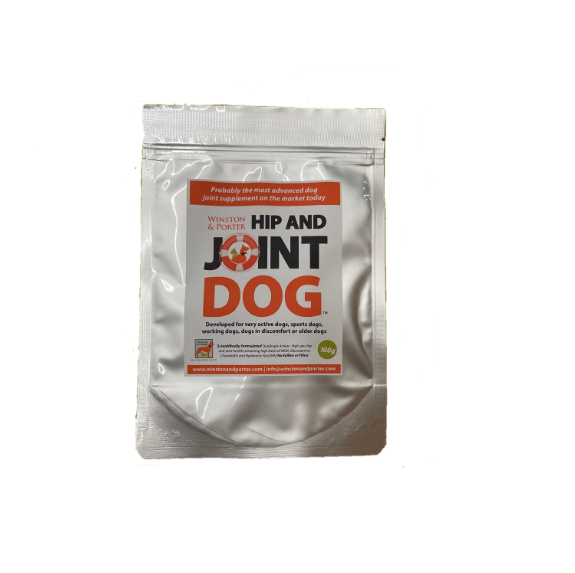
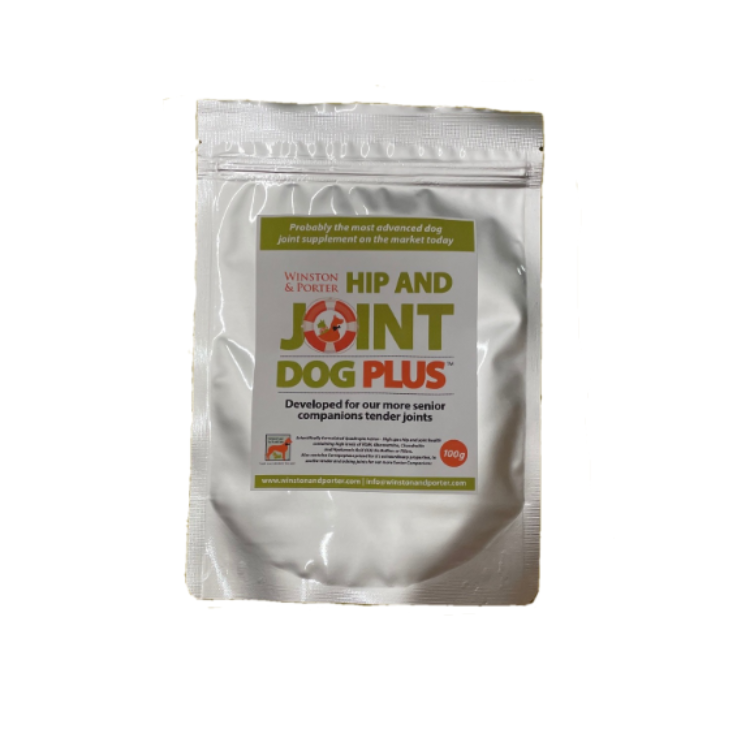
Our Hip & Joint Dog PLUS delivers 2,500mg glucosamine, 1,200mg chondroitin, 2,500mg MSM and 300mg hyaluronic acid per serving, at £23.70. That is the comparison that matters: milligrams per pound, not the headline price.

Serrapeptase for Dogs: The Anti-Inflammatory That Replaces Green-Lipped Mussel
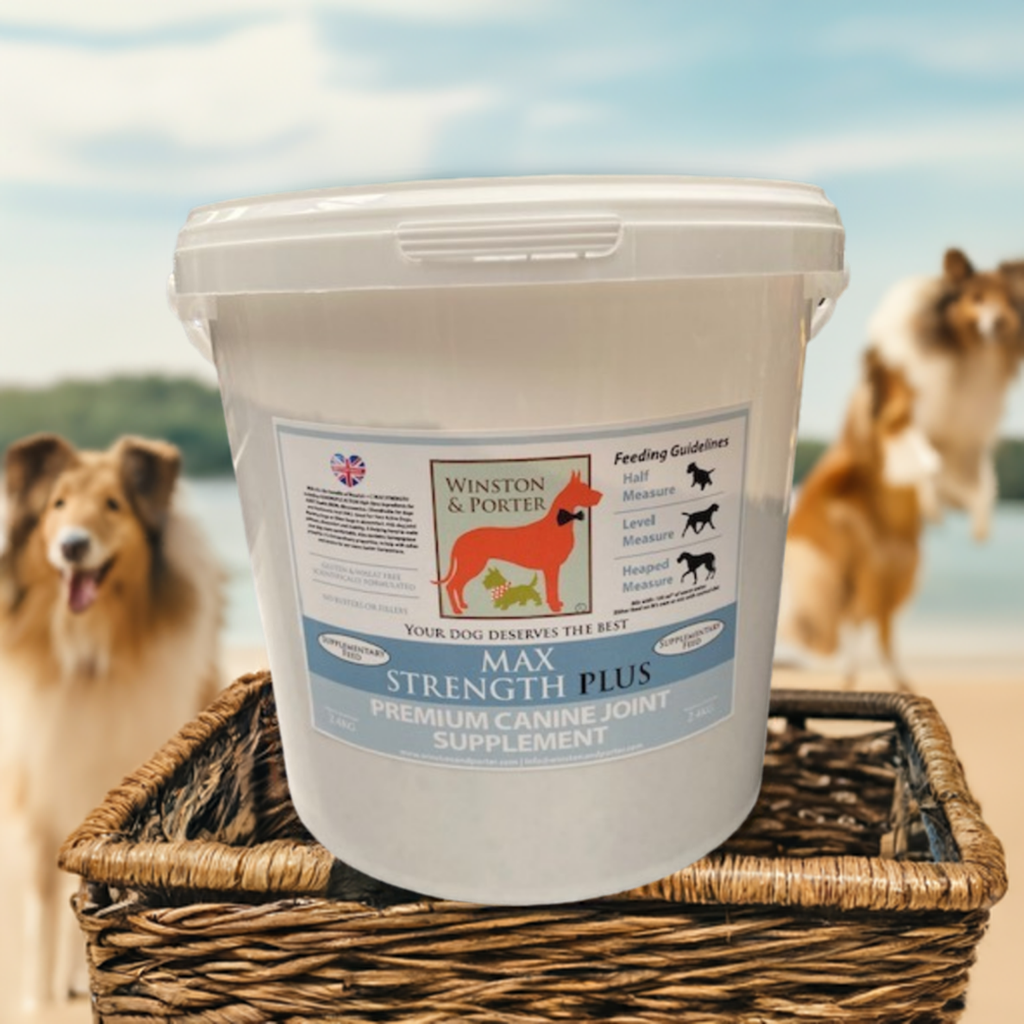
Serrapeptase is a natural proteolytic enzyme that supports the body's inflammatory response and helps ease stiff, tender joints. We use serrapeptase rather than green-lipped mussel in our formulas because it targets stiffness and discomfort directly. It appears in Hip & Joint Dog PLUS and in Max Strength Plus, our comfort and mobility porridge at £31.45.
Price Per Effective Daily Dose: The Only Cost Comparison That Matters
Divide the tub price by the number of days it actually lasts at your dog's dose. That figure, not the shelf price, tells you what you are paying. It is the single most useful number in this category, and almost no one publishes it.

How to run the sum in three steps
- Find the daily serving for your dog's weight. Most labels dose by weight band, so a 30kg dog and a 10kg dog pay very different daily costs from the same tub.
- Divide the tub weight by the daily serving. That gives you the number of days the tub lasts.
- Divide the tub price by those days. That is your true daily cost.
A 400g pouch of Hip & Joint Dog PLUS lasts 62 days for a medium dog (15-40kg) at 6.5g daily. At £23.70, that is roughly 38p per day. A large dog at 13g daily gets 30 days from the same pouch, around 79p per day.
Hip & Joint Dog PLUS – Premium High-Strength Canine Joint Support Powder (UK) →

Why budget products often cost more per day
A cheaper powder dosed at 2g daily that lasts three weeks looks like the bargain on the shelf. Run the sum and the daily cost is often higher than a product with a larger tub and a higher headline price. The trap is dosing: a product that requires multiple servings to reach a meaningful amount multiplies your daily cost without changing the shelf price.
What a fair daily cost looks like
There is no universal benchmark, but the pattern is consistent: products that disclose full milligram amounts and dose at studied levels tend to land in a similar daily range once you do the maths. Products that hide doses behind blends tend to look cheap per tub and expensive per day. If a daily cost seems unusually low, check the serving size before you celebrate.
Compare like with like
A fair comparison holds three things constant: the ingredient, the dose, and the form. A 2,500mg glucosamine serving is not comparable to a 500mg serving, and a chelated mineral is not comparable to an oxide. Compare cost per gram of the active ingredient at the studied dose, not cost per tub.
Pro Tip
Keep a note of the daily cost for any product you are considering. When you reassess in six to eight weeks, you will know exactly what the trial cost you, and whether the result justified it.
Run this sum before you buy anything. It exposes budget products that look cheap per tub and cost more per day, and it is the only comparison that reflects what you actually spend.
How Long Do Dog Joint Supplements Take to Work?
Most dog joint supplements take two to four weeks to show visible change. Hip & Joint Dog PLUS is formulated for noticeable improvements in movement and comfort after 2-3 weeks of daily use. Hip & Joint Dog is formulated for visible change after around 3 weeks.
Give any supplement a fair trial of at least four weeks before judging it. Joint support is cumulative, not instant. If you see nothing at all by week six, that is your signal to reassess.
What Dog Joint Supplement Reviews Reveal About Value
Reviews tell you about palatability, delivery and owner experience, not clinical proof. Read them for patterns: do owners mention their dog refusing the powder? Do they mention a change in morning stiffness? Our own customers, including Martha, Hamish and Mouse, Queen Nora, and Orlando and Stanley, describe exactly that kind of change, and we hold hundreds of five-star reviews across Trustpilot, Google and Lipscore.
Filter reviews for dogs of similar size and age to yours. A Chihuahua owner's experience says little about a 40kg Labrador.
When to Stop, Switch or Reassess a Joint Supplement
Stop or switch if you see no change after six to eight weeks, if your dog refuses the product, or if side effects appear. Discontinue immediately and seek veterinary advice if your dog becomes unwell after use.
Reassess the dose as your dog's weight changes. A formula that worked at 20kg may be underdosed at 35kg. And if your dog is on medication or has a diagnosed condition, speak to your vet before starting anything.
Pro Tip
Keep a simple two-week log of morning stiffness and walk willingness before you start. It gives you an objective baseline to compare against, which is far more reliable than memory.
Joint stiffness in an ageing dog is a challenge that deserves a formula built on real doses, not marketing. Winston & Porter develops supplements from a scientific standpoint using human-grade ingredients, with every milligram disclosed. Our Hip & Joint Dog PLUS combines glucosamine, chondroitin, MSM, hyaluronic acid and serrapeptase at £23.70, and the Complete Joint Support Kit bundles it with our multivitamin at £57.28. Register with us and start your dog on a routine you can actually measure.
Frequently Asked Questions
Are expensive joint supplements worth it for dogs?
Price alone tells you very little. What matters is whether the formula delivers studied ingredients at meaningful doses, whether the label is fully transparent, and what the cost per daily serving is. A 2026 equine study and reviews in the wider literature show results vary by ingredient, and Harvard Health Publishing notes the evidence for glucosamine and chondroitin is not compelling even though some trials found modest benefit. Compare joint supplements on dose and transparency, not on price tag, then judge over 4 to 6 weeks.
What should I look for in dog joint supplement ingredients?
Look for named ingredients with stated amounts per serving, not a proprietary blend. Key ones include glucosamine, chondroitin, MSM and hyaluronic acid for cartilage and joint lubrication. Winston & Porter's Hip & Joint Dog PLUS lists 2,500mg glucosamine, 1,200mg chondroitin, 2,500mg MSM and 300mg hyaluronic acid per serving, plus serrapeptase, so you can see exactly what your dog gets each day.
How long does it take for a dog joint supplement to work?
Most owners should allow 3 to 6 weeks of consistent daily use before judging a joint supplement. Winston & Porter reports noticeable improvements in movement and comfort after around 2 to 3 weeks with Hip & Joint Dog PLUS, and roughly 3 weeks with Hip & Joint Dog. Senior dogs with advanced stiffness may need longer. Keep a simple diary of morning stiffness and walk length so you can compare fairly rather than relying on memory.
Is serrapeptase for dogs a good alternative to green-lipped mussel?
Serrapeptase is a natural proteolytic enzyme used to support the body's normal inflammatory response and ease stiff or tender joints. Winston & Porter uses serrapeptase rather than green-lipped mussel across its joint range, including Max Strength Plus. It appears in formulas alongside glucosamine, chondroitin, MSM and hyaluronic acid, so it works as part of a broader joint support routine rather than a standalone fix. Ask your vet before starting if your dog is on medication.