How to Start Puppies on Solid Food Safely
Last Updated: October 26, 2026
Quick Summary
Puppies can start puppies solid food at around three to four weeks old, beginning with soft, mushy meals while they still nurse from their mother. Weaning continues until puppies are fully weaned at roughly eight weeks, and it should take two to four weeks.
- Start with a small amount of softened food once a day, mixed to a porridge texture.
- By six to eight weeks, most puppies eat solid food several times a day and nurse only occasionally.
- Feed a weaning puppy three to four small meals daily, moving to three meals by three to six months.
- Soak kibble in warm water or milk replacer for 10-15 minutes until soft through.
- Change one thing at a time during weaning and give it two or three days to settle.
Table of Contents
- When Can Puppies Start Eating Solid Food?
- How to Wean Puppies Onto Solid Food: A Step-by-Step Guide
- Your Puppy Weaning Schedule: An Age-by-Age Timeline
- What to Feed Puppies When Weaning: Food Choices and Preparation
- How Often to Feed a Weaning Puppy
- Troubleshooting Weaning: Warning Signs and Common Mistakes
- Safe Feeding for Orphaned Puppies and Food Safety
- Supporting Your Puppy's Growth with the Right Nutrition
- Frequently Asked Questions
When Can Puppies Start Eating Solid Food?
Puppies can start eating puppies solid food at around three to four weeks old, beginning with soft, mushy meals while they still nurse from their mother. This is the start of weaning, and it continues until puppies are fully weaned at roughly eight weeks. Early nutrition shapes a dog's growth, immunity and joint health for life.
The change from mother's milk to puppy food is a big one. Get it right and your puppy grows strong and steady. Rush it and you get upset stomachs, loose stools and a stressed mother.
Below, we explain exactly when puppies start eating solid food, how to wean them step by step, and what to feed them at every stage. We also cover the mistakes that catch most owners out.
How to Wean Puppies Onto Solid Food: A Step-by-Step Guide
Weaning is the process of moving a puppy from mother's milk to a complete diet of solid food. It should take two to four weeks, and the pace matters more than the destination.
Step 1: Prepare the Weaning Environment
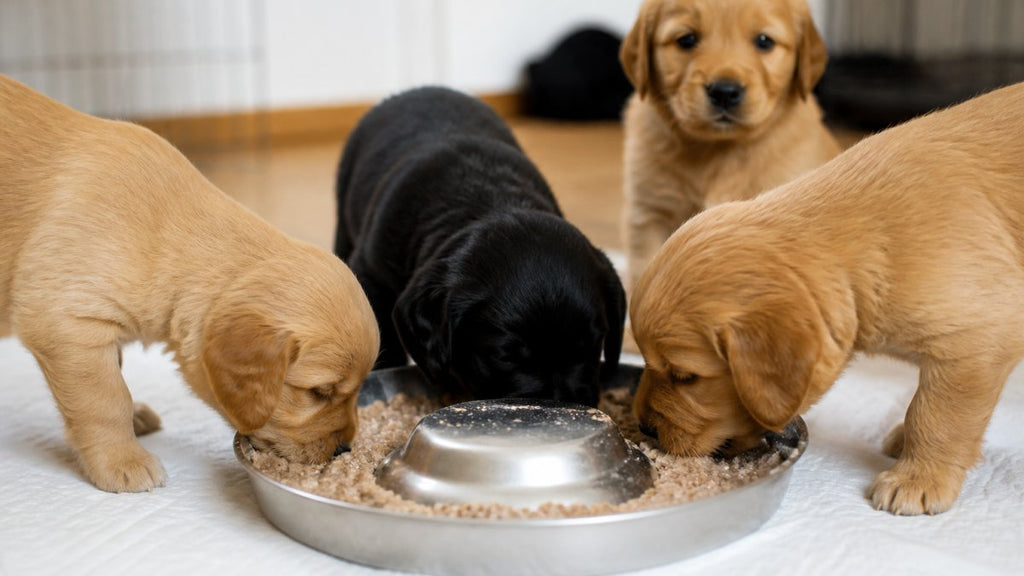
Set up a quiet, warm space where the mother can leave the litter when she needs a break. Use shallow bowls that puppies can reach without stepping into them. Keep the area clean and easy to wipe down, because weaning is messy.
Step 2: Introduce Softened Food Gradually
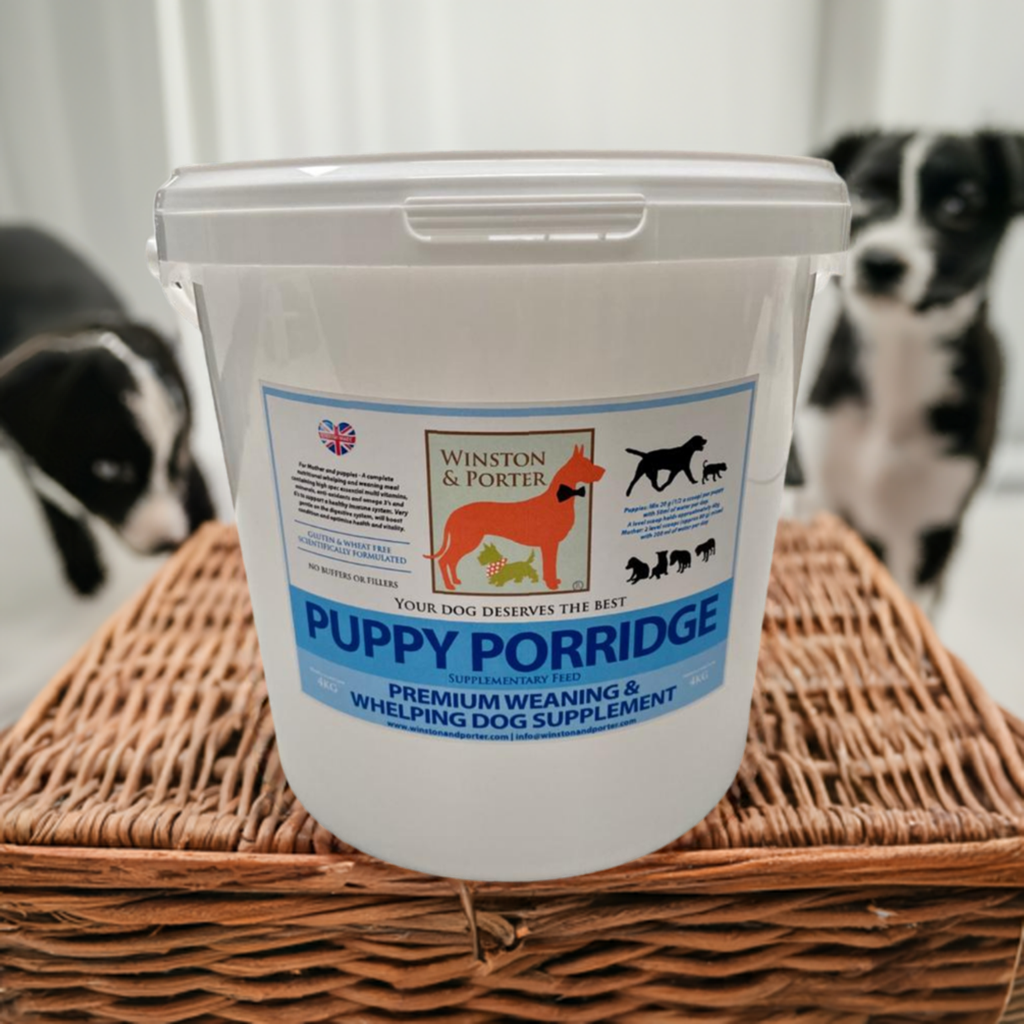
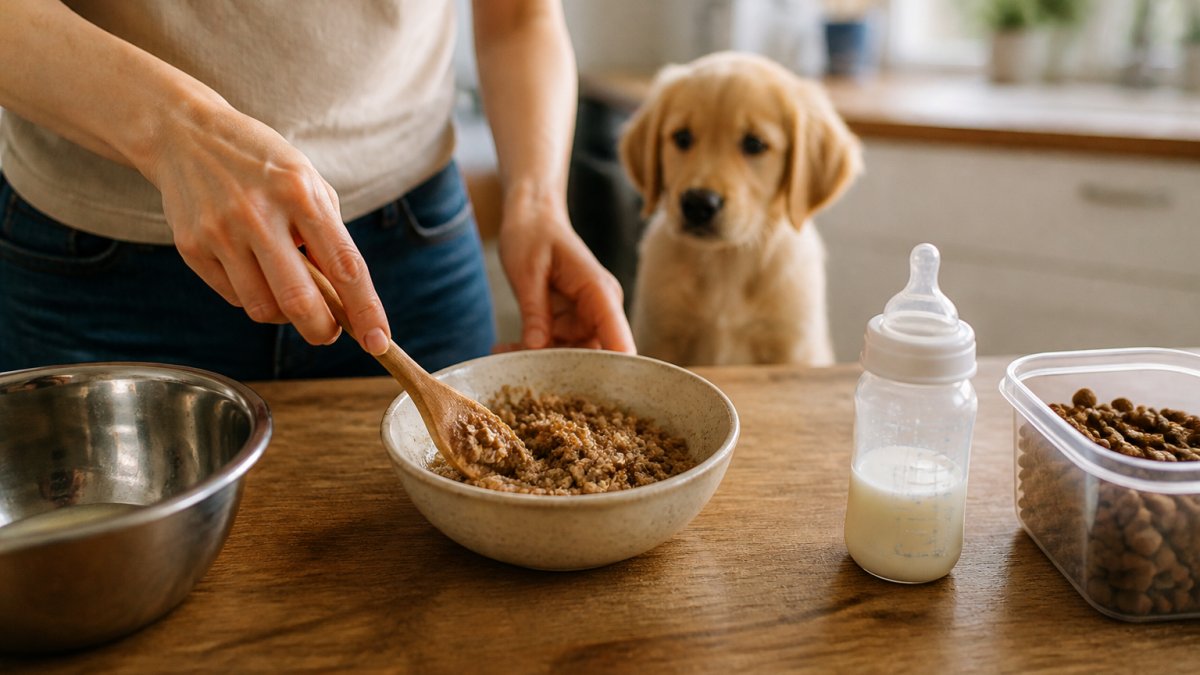
Start with a small amount of softened food once a day. Mix puppy food with warm water or a milk replacer until it forms a porridge texture. Let the puppies lick it from your fingers first, then move to a shallow dish. For a ready-made option, our Puppy Porridge Premium Weaning and Whelping Supplement is designed exactly for this stage, made with ewe's milk, chia seeds and wheat-free oats.

Step 3: Reduce Milk and Increase Solids
Over two to four weeks, increase the number of solid meals and reduce the time puppies spend nursing. By six to eight weeks, most puppies are eating puppies solid food several times a day and nursing only occasionally.
Your Puppy Weaning Schedule: An Age-by-Age Timeline
A clear timeline takes the guesswork out of weaning. Here is how the schedule typically looks:
| Age | What Happens | Meal Frequency |
|---|---|---|
| 3-4 weeks | First taste of softened food; still nursing | 1 small meal daily |
| 4-5 weeks | More solid meals; mother nurses less | 3-4 small meals daily |
| 6-8 weeks | Fully weaned onto puppy food | 4 meals daily |
| 8-10 weeks | Settled on a complete puppy diet | 3-4 meals daily |
| 3-6 months | Steady growth phase | 3 meals daily |
Small-breed puppies often wean slightly faster than large or giant-breed puppies. Large-breed puppies need careful portion control so they grow steadily rather than too fast, which supports healthy joint development.
What to Feed Puppies When Weaning: Food Choices and Preparation
The best food for weaning puppies is a complete puppy diet, softened to a porridge texture. A complete diet means it contains all the balanced nutrition a growing puppy needs, so you are not guessing at supplements or topping up with human foods.
Wet vs Dry Food: Which is Better for Weaning?
Wet food is easier for tiny puppies to eat and smells more appealing, which helps build interest in food. Dry food is more economical and better for dental health later on. Many breeders start with softened dry food, which gives puppies the texture they will eat as adults. Either works, provided it is a complete puppy formula and you transition gradually rather than switching brands mid-wean.
How to Prepare Softened Puppy Food
- Use warm water or a puppy milk replacer, mixed into dry kibble at roughly one part kibble to two to three parts liquid to start
- Let it soak for 10-15 minutes until the kibble is soft through, not just damp on the outside
- Mash with a fork to a porridge consistency with no hard lumps a puppy could choke on
As puppies get older, reduce the liquid gradually over two to four weeks until they are eating damp kibble and then dry kibble. This is the same principle as the age-by-age schedule above: change one variable at a time so you can tell what caused any loose stools.
Pro Tip
A simple consistency test: the food should hold its shape on a spoon for a second, then slide off. If it pours like milk, it is too thin; if it clumps like dough, it is too thick for a three-week-old.
Watch out: never microwave puppy food to speed up softening. Hot spots can burn a puppy's mouth, and uneven heating is a real risk. Warm water from the tap is enough.
Food Safety and Storage
Prepare only what you need for one meal. Bacteria multiply quickly in warm, moist food, so do not leave a soaked batch sitting out between feeds. Store opened dry food in an airtight container as the label directs, keep wet food in the fridge once opened, and use it within the time stated on the pack.
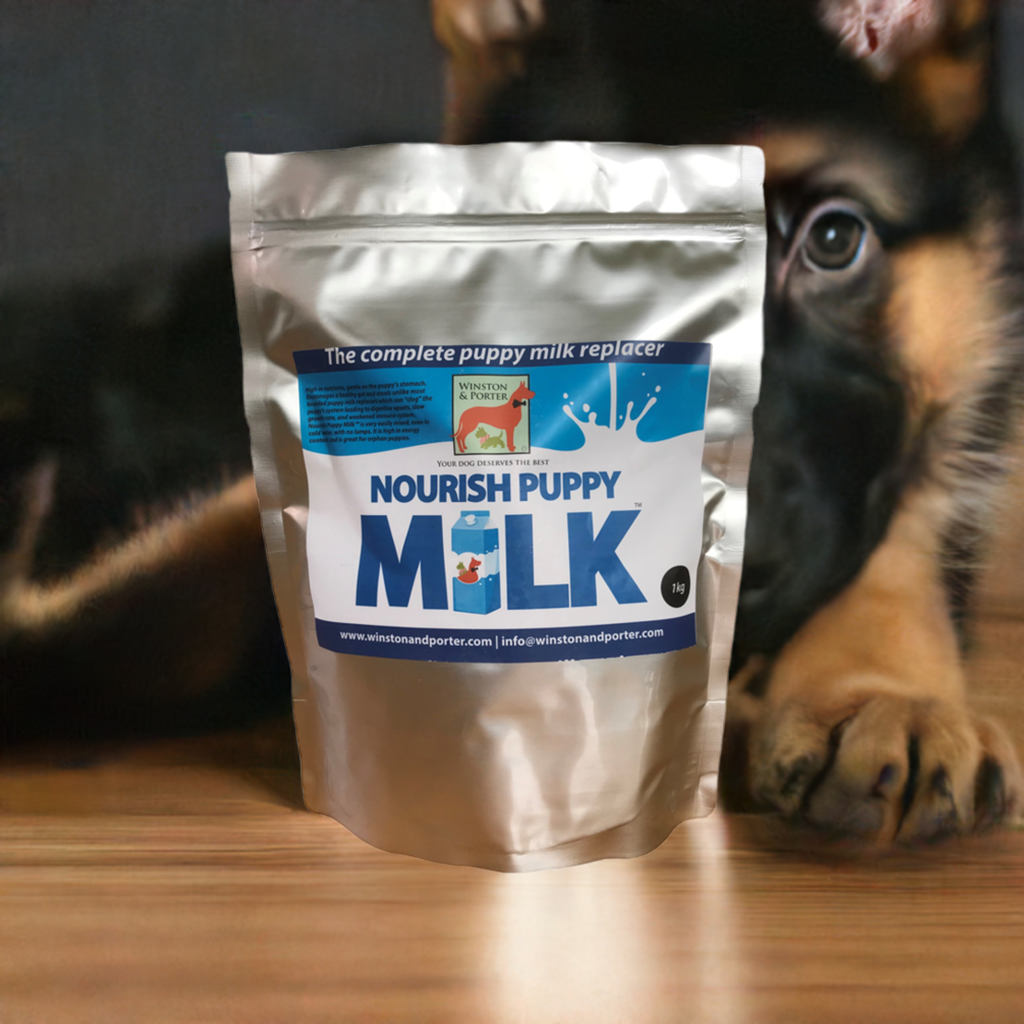
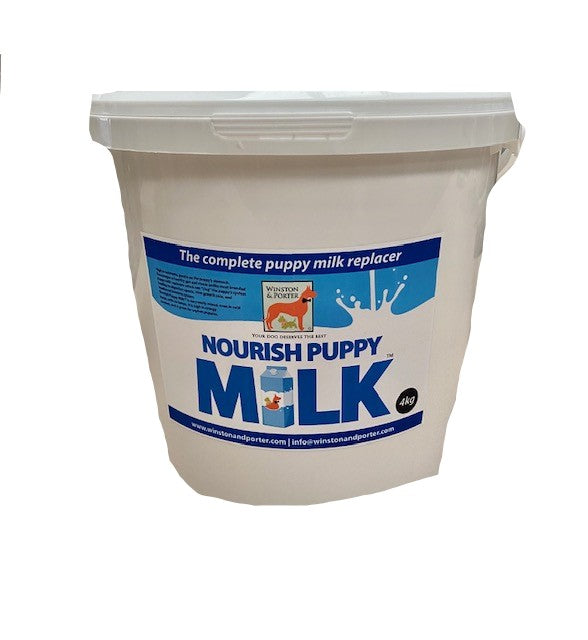
If you are raising a puppy without the mother, use a proper puppy milk replacer rather than cow's milk, which can cause digestive upsets. Our Complete Puppy Milk Replacer Powder mixes easily in water and is high in energy for orphan puppies, and our Puppy Porridge Premium Weaning and Whelping Supplement is designed for the first soft meals, made with ewe's milk, chia seeds and wheat-free oats.

How Often to Feed a Weaning Puppy
Feed a weaning puppy three to four small meals daily, then move to three meals a day by three to six months. Small, frequent meals suit a puppy's small stomach and steady growth needs.
🐾 Puppy Porridge Premium Weaning and Whelping Supplement →
As puppies grow, their feeding schedule changes:
- Three to four weeks: one small taste of food daily, alongside nursing
- Four to eight weeks: three to four small meals daily
- Eight weeks to three months: four meals daily
Fresh water should be available at all times. Puppies on solid food need it more than nursing puppies do.
Troubleshooting Weaning: Warning Signs and Common Mistakes
Most weaning problems come from moving too fast. A common mistake is switching a puppy to full solid food in a few days, which leads to loose stools and a puppy that refuses meals. Another is changing food, texture and meal frequency all at once, so you cannot tell what caused the problem. Change one thing at a time and give it two or three days to settle.
How to Monitor Progress
Keep a simple daily record for each puppy during weaning:
- Appetite: how much is offered and how much is eaten at each meal
- Weight: weigh on the same scales at the same time of day, every two to three days
- Stool: consistency and frequency; soft is normal at first, watery is not
A puppy that is gaining weight steadily, has formed stools and is lively is transitioning well. A puppy that is losing weight, has watery stools for more than a day, or is quiet and reluctant to feed needs action.
Warning Signs and What to Do
Look out for these warning signs:
- Loose stools lasting more than a day
- Refusing food for more than 24 hours
- Vomiting after meals
If any of these appear, slow down. Go back a step in the schedule, offer smaller and more frequent meals, and make sure fresh water is always available. Contact your vet promptly if symptoms persist beyond a day, if a puppy is not gaining weight, or if you are managing an orphaned litter without maternal care. Very young puppies can deteriorate quickly, so do not wait to see if it resolves on its own.
Watch Out
Do not add supplements or home remedies to a puppy's food to fix a digestive upset during weaning. Correct the pace and texture of the food first, and speak to your vet before changing anything else.
Orphaned Puppies and Puppies Without the Mother
Puppies without maternal care need a structured feeding plan from day one: a proper puppy milk replacer at the correct strength, fed at the right frequency for their age, with a gradual move to softened food on the same timeline as mothered puppies. Weigh them daily rather than every few days, because they have no mother to compensate for a puppy that is falling behind.
Safe Feeding for Orphaned Puppies and Food Safety
Orphaned puppies need a proper milk replacer before they can start solid food. Never use cow's milk, which can cause digestive upsets in puppies. Our Complete Puppy Milk Replacer Powder mixes easily in water and is high in energy for orphan puppies.
Food safety matters just as much:
- Keep raw and cooked food separate
- Wash bowls and hands after every feed
- Store opened food as the label directs
Puppies have small, sensitive systems. When in doubt, leave a food out.
Supporting Your Puppy's Growth with the Right Nutrition
Good weaning sets up a lifetime of healthy growth. If you are raising a bigger dog, our guide to joint supplements for growing large breed dogs explains how to support development as they grow.
We built our range from a scientific standpoint, using human-grade ingredients, because early nutrition is where comfort and longevity begin. Our customers tell us the difference shows in happier, more mobile animals.
Frequently Asked Questions
At what age can puppies start eating solid food?
Puppies can start eating solid food from around three to four weeks old. At this stage, their teeth are beginning to come through and their digestive systems are developing enough to handle more than just their mother's milk. The process should begin gradually, offering small amounts of softened puppy food while they continue to nurse. By the time they are six to eight weeks old, they should be eating solid food more confidently and relying less on their mother.
How often should a weaning puppy be fed?
A weaning puppy should be fed small, frequent meals. From three to four weeks, offer food three to four times daily. By six to eight weeks, you can reduce this to three meals daily. Always ensure fresh water is available and monitor their intake to adjust portions as they grow. This regular feeding schedule supports steady growth and helps prevent digestive upsets.
When can puppies eat dry food without it being softened?
Puppies can usually manage dry food without softening it by the time they are eight to ten weeks old. Their teeth are stronger and their jaws more developed. However, you should still introduce it gradually. Start by mixing a small amount of dry kibble into their softened food, then slowly increase the ratio of dry to wet over a week or two. Always supervise them when they first try dry food to ensure they are chewing it properly.
What are the signs a puppy is ready to start weaning?
Key signs include increased interest in the mother's food, puppies licking their lips or showing curiosity when they smell food, and the emergence of their first teeth. You might also notice the mother spending less time nursing them or the puppies becoming more mobile and exploring their environment. At this point, you can begin offering a small amount of softened puppy food on a shallow plate to see if they are ready to start the weaning process.
Weaning a puppy is one of the most rewarding parts of early ownership, and it is far easier when you have the right nutrition on hand. At Winston & Porter, our scientifically developed Puppy Porridge and Milk Replacer give you a gentle, complete start, made with human-grade ingredients and backed by real customer results. Get started with Winston & Porter and give your puppy the strongest start in life.

Blogtastic Articles
26
Oct