
Joint Support Dog Food vs Supplements: Why a Separate Supplement Can Make Sense
Choosing how to support your dog’s everyday wellbeing can feel complicated. Alongside traditional dog joint supplements, there are now complete dog foods containing ingredients such as glucosamine, omega-3 fatty acids and turmeric, promoted for joint health and normal mobility.
The appeal is easy to understand: feed your dog dinner and include joint-support nutrition in the same bowl. For some owners, that convenience is a good fit.
But does dog food with glucosamine make a separate supplement unnecessary? And what should you compare when choosing between joint support dog food and supplements?
The answer depends on the formulation, the amount your dog actually eats and the nutritional approach that suits them. A dedicated supplement offers a practical advantage: you can measure its serving separately from your dog’s meals. That creates flexibility without requiring a complete change of food.
What is joint support dog food?
Joint support dog food is food formulated and marketed with ingredients intended to support normal joint function or mobility. Depending on the recipe, these might include glucosamine, chondroitin, omega-3 fatty acids or other nutritional ingredients.
A complete dog food is designed to provide a balanced daily diet when fed as directed for the stated life stage. Its main job remains feeding the whole dog, including their energy, protein, vitamin and mineral requirements.
A joint supplement is usually a complementary feed. It contributes selected ingredients alongside the main diet rather than replacing a complete meal.
Neither format automatically tells you how much joint-support nutrition your dog receives. A food may publish detailed ingredient quantities, while a supplement may provide limited information. Always judge the individual label rather than assuming one category is more transparent.
Why convenience is only part of the comparison
Combining joint-support ingredients with complete food can simplify feeding. There is no extra tub to open, scoop to measure or separate purchase to remember.
However, convenience should sit alongside other questions. Does the food suit your dog’s digestion and preferences? Is it appropriate for their life stage? How much of each named ingredient will they receive at their actual feeding amount?
If you already have a complete food that works well, changing it solely to obtain one added ingredient may be unnecessary. A separate joint supplement powder for dogs can let you keep that familiar diet while considering an additional, measured source of nutritional support.
For owners managing several dogs, that separation can also make feeding easier to organise: each dog receives an appropriate meal and their own labelled supplement serving.
The key question: how much does your dog actually receive?
An ingredient name on a bag is a starting point, not the whole comparison. Knowing that two products contain glucosamine does not establish that they provide the same quantity, ingredient form or finished formulation.
Look for the amount per kilogram of food, per gram of supplement or per clearly defined daily serving. Then check what that means for your own dog.
For example, imagine a food declares 1,000mg of glucosamine per kilogram. A dog eating 250g of that food receives 250mg daily. A dog eating 400g receives 400mg.
These are hypothetical figures, not recommended amounts or a comparison with a named brand. They simply show why the quantity printed on the pack needs translating into the quantity in the bowl.
The calculation is straightforward:
Ingredient amount per kilogram × kilograms of food eaten daily = daily ingredient intake.
For a supplement, use the declared quantity in the serving recommended for your dog’s weight. If “per daily serving” does not identify the serving size, ask the manufacturer before comparing.
Why measurable ingredient quantities matter

Clear measurements help you understand what you are buying. They also make it easier to compare products fairly and explain your dog’s feeding routine to your vet.
Useful information includes the named ingredient, its form, the quantity supplied and the serving to which that quantity applies. A blend weighing 2,000 mg is not necessarily 2,000 mg of each ingredient listed within it.
Likewise, a declaration for total omega-3 does not necessarily tell you the individual amounts of EPA and DHA. Different declarations answer different questions, so compare like with like.
This is where a well-labelled, dedicated dog joint supplement can be useful. You can identify its contribution separately from the rest of the meal, rather than relying on a front-of-pack phrase such as “with added joint support”.
Transparency supports an informed decision. It does not, by itself, demonstrate that one product produces better outcomes.
What does “high strength” mean in a dog joint supplement?
When shopping for a high strength dog joint supplement, look beyond the words on the front of the pack. Ask what is concentrated, how it is measured and how much is provided in the recommended serving.
The biggest number is not automatically the best choice. Suitability depends on the complete formulation, ingredient quality, tolerability, feeding guidance and relevant evidence. More is not always better.
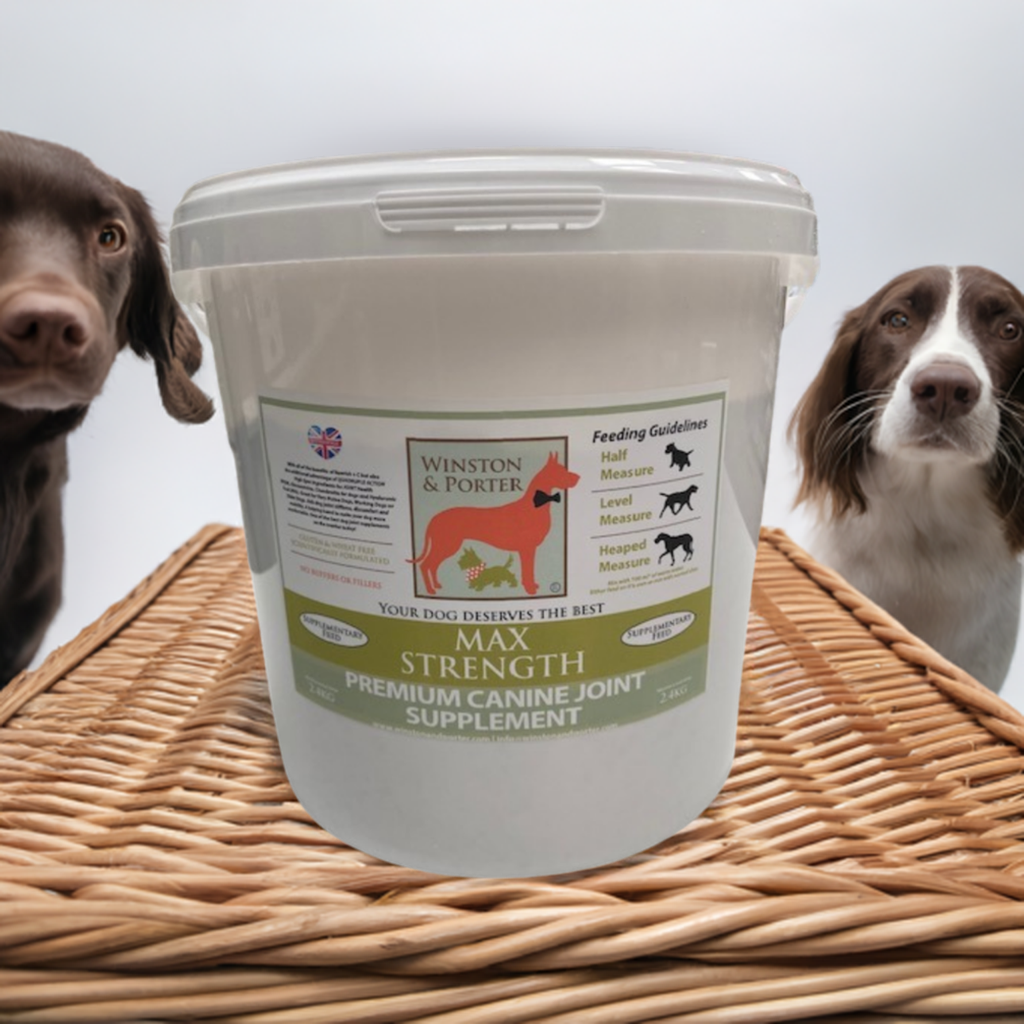
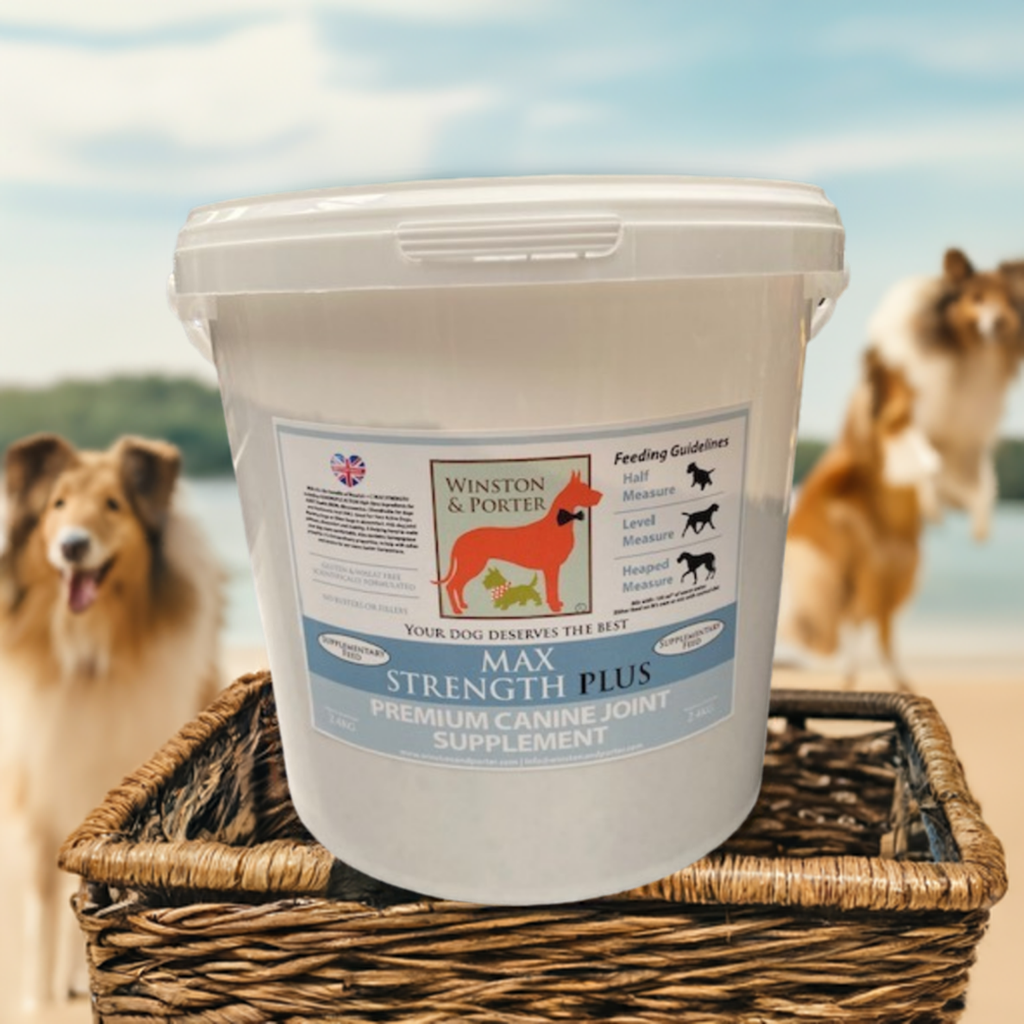
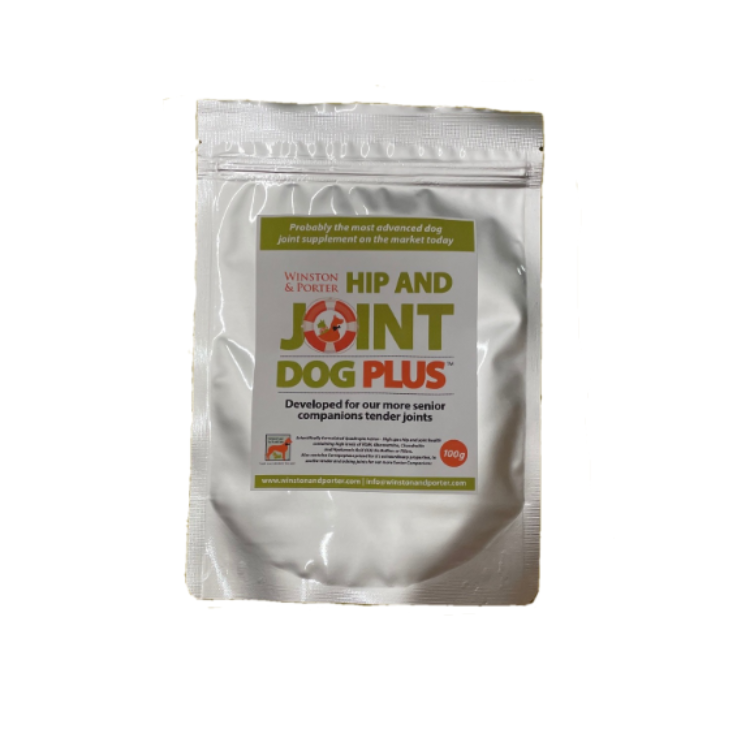
At Winston & Porter, we encourage owners to look at the ingredients and instructions for the specific product they are considering. Our Hip & Joint Dog PLUS supplement is a powder format, giving owners a separate product to measure alongside their dog’s meals.
The practical benefit of that format is control over the feeding routine. It should not be confused with a promise that every dog needs extra supplementation or that a concentrated powder is automatically superior to a well-formulated food.
Separate joint support from your dog’s calorie intake
Your dog’s food portion is determined by their energy needs, body condition, life stage and other individual factors. Those needs can change over time.
When a joint-support ingredient is incorporated into food, the amount consumed changes with the amount of food eaten. If the food portion goes down, the intake of that ingredient goes down too.
A separate supplement allows its labelled serving to be considered independently. You can review your dog’s food portion without automatically making the same proportional change to the supplement.
That does not mean ignoring weight-based instructions. If your dog’s weight changes, or their nutritional needs change, review both feeding guides and seek advice where needed.
Never increase the amount of food simply to provide more of a joint-support ingredient. Extra food also provides extra calories and other nutrients. The meal should remain appropriate for the whole dog.
Keep the food that already suits your dog

Finding a food your dog enjoys and tolerates can take time. Some dogs have strong preferences; others need particular nutritional management under veterinary guidance.
A dedicated supplement may allow you to retain an established food instead of introducing a completely different recipe. You can discuss the additional product on its own merits, including ingredients, suitability and compatibility with the diet.
This can be especially helpful when different dogs in a household eat different foods. There is no need to assume every dog should move onto the same joint-support recipe.
However, adding a supplement still changes the overall diet. Check its full ingredient list, including flavourings and carriers, particularly if your dog follows a restricted or veterinary diet. Keeping the main food unchanged does not remove the need to assess the addition carefully.
Can you use a joint supplement with joint support dog food?
Sometimes, but it should be a deliberate decision. Two products containing similar ingredients are not automatically a better combination.
Start by checking the food, supplement and any treats, oils or other complementary feeds your dog receives. Consider the total contribution across the whole routine.
If quantities are unclear, contact the manufacturers. Your vet can help assess whether combining products is appropriate, particularly when a dog has an existing condition, takes medication or eats a veterinary diet.
Do not double the supplement serving because a dog is especially active, and do not assume a joint-support food makes any additional supplement suitable. Follow the specific product instructions.
The advantage of independent feeding is thoughtful flexibility within the guidance, rather than unrestricted adjustment.
Compare value using cost per day
Comparing bag and tub prices alone can be misleading. A larger pack is not necessarily better value if the recommended daily amount is also larger.
For supplements, divide the purchase price by the number of days the pack lasts at your dog’s labelled serving. Include delivery charges when comparing the actual cost.
For example, a hypothetical £30 tub providing 60 days of feeding costs 50p per day. A £20 tub providing 25 days costs 80p per day.
For joint-support food, calculate its daily feeding cost and compare it with the cost of an appropriate complete food plus a suitable supplement. Remember that the food provides the main diet as well as any added joint-support ingredients.
Then compare what each option supplies. A lower price does not establish equivalent nutrition, just as a higher price does not establish better quality. The useful comparison combines serving information, formulation, suitability and total daily cost.
Making a powder part of everyday feeding
A powder can be a simple addition to an established routine. Measure the recommended quantity and mix it into your dog’s food according to the product instructions.
If the manufacturer permits splitting the serving between meals, keep the total daily amount consistent. Check that your dog eats the portion containing the supplement; leaving some behind makes intake harder to judge.
Use the supplied measuring guidance carefully. Scoops measure volume, while feeding instructions may specify weight. Different powders have different densities, so a scoop from another product is not an interchangeable measuring tool.
Store the supplement as directed, keep the packaging for reference and check the best-before date. A clear routine makes it easier to record what your dog receives and to discuss any questions with the manufacturer or your vet.
Choosing joint support for your individual dog
There is no single best dog joint supplement for every household. The right nutritional approach needs to suit the individual dog and work reliably for the person feeding them.
Before choosing, ask whether the product provides clear quantities, understandable feeding instructions and accessible manufacturer support. Consider whether the format fits your dog’s preferences and your normal mealtimes.
Look at the wider picture too. Appropriate exercise, body condition and a balanced diet all deserve attention alongside any complementary feed. A supplement does not make those foundations less important.
Winston & Porter’s dog supplement range gives owners options to explore alongside their existing feeding routine. If you are unsure which product’s instructions or ingredients fit your circumstances, ask us for product information and discuss suitability with your vet where necessary.
Frequently asked questions
Does complete dog food mean my dog cannot need a supplement?
Complete food is intended to provide balanced nutrition when fed as directed. It does not mean every dog needs an additional supplement, or that none could be appropriate. Consider the individual diet, product and dog rather than adding something automatically.
Is dog food with glucosamine the same as a joint supplement?
No. Both may contain glucosamine, but they serve different feeding roles. Compare the amount consumed daily, the ingredient forms and the wider formulation. Neither the shared ingredient nor the product category establishes equivalence.
Can I change the supplement amount without changing the food?
You can measure a separate supplement independently, but any adjustment must remain within its instructions or professional advice. Review the serving if your dog’s weight or circumstances change. Independence does not mean unlimited dosing.
What is the main advantage of a separate dog joint supplement?
It lets you keep an appropriate main diet while measuring selected nutritional ingredients separately. For owners who value a clear, adaptable feeding routine, that flexibility can make a dedicated supplement a practical choice.
Blogtastic Articles
26
Oct

26
Oct